Cleaning Metal Detecting Finds: When to Stop
Why aggressive cleaning can damage coins and relics, and when identification should come first.
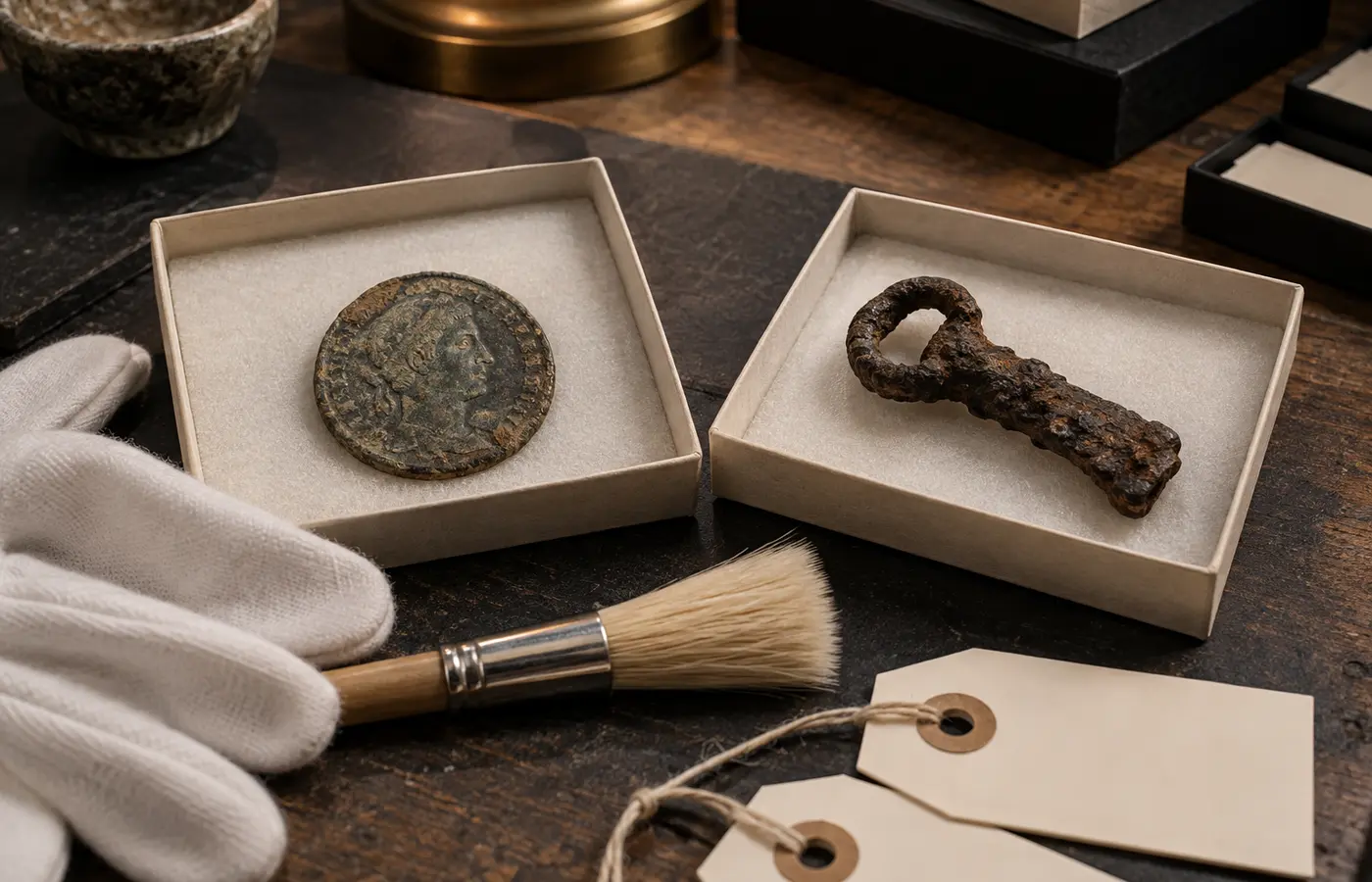
Cleaning can reveal detail, but excessive cleaning can permanently remove evidence, patina and collector value.
The safest first response
Stop before reaching for a brush or chemical. Photograph the object as found, record its measurements and identify the likely material. Loose dry soil can often be removed with air and a very soft brush, but stop when the surface begins to change.
Why aggressive cleaning causes damage
Patina is not simply dirt. On many copper-alloy objects it is part of the surviving surface. Abrasives can erase lettering, plating, tool marks and fine decoration. Acids and household chemicals can continue reacting after the object looks clean.
Material-by-material caution
Copper and bronze
Keep stable green or brown patina intact. Powdery bright-green corrosion may require professional advice, especially on significant objects.
Iron
Iron can remain unstable after excavation. Do not soak it casually or seal moisture inside a container. Large flakes may carry original surface detail.
Silver
A dark surface may be historically stable. Polishing removes metal and can reduce detail. Avoid dips and polishing compounds on unknown coins.
Lead and pewter
Wear gloves, wash your hands and keep lead objects away from children and food-preparation areas. These soft metals scratch easily.
When you should stop
- The object may be archaeological or unusually old
- The surface is flaking, powdery or cracked
- Lettering or plating is beginning to disappear
- You do not know the metal
- The find may need to be reported under local law
Storage before expert advice
Keep the object separate, labelled and physically supported. Record what you did to it. Avoid airtight storage when moisture is trapped, and do not mix unstable metals together.
Frequently asked questions
Can I use vinegar or lemon juice?
Not on an unidentified or potentially valuable find. Acids can strip the surviving surface quickly.
When is professional conservation justified?
Seek specialist help when the object is rare, fragile, legally reportable or has active corrosion.
Continue learning
Use our beginner metal detecting guide, compare equipment in the detector database, and ask for help in the DigTreasures community.
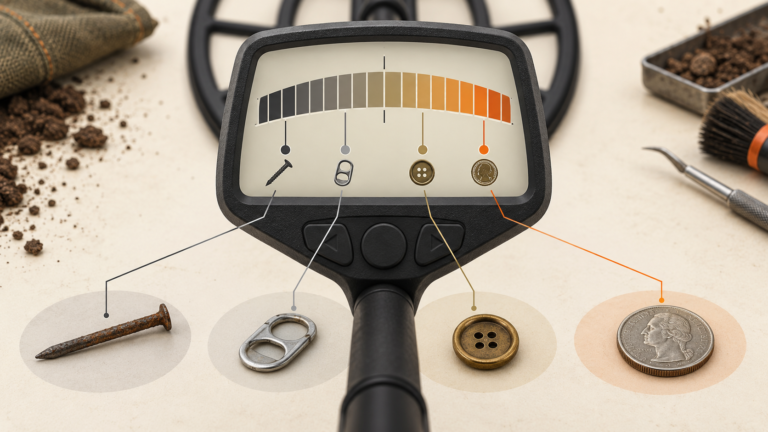 Detector Guides
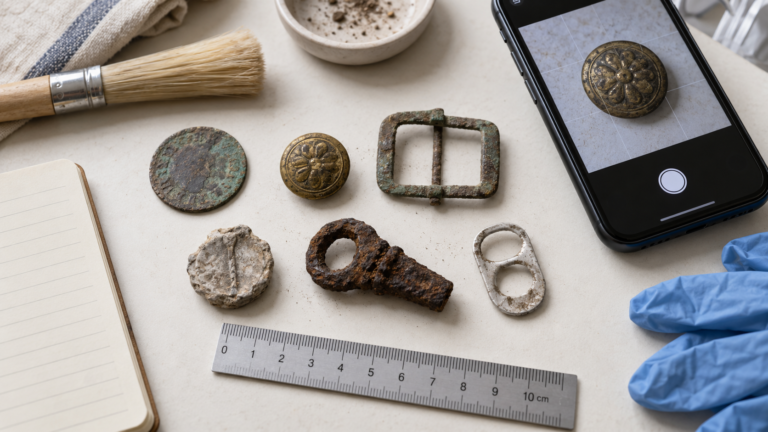 Identification Guides
 Beginner Guides