The 8-Point Find Identification Checklist
A quick checklist for documenting an unknown object before posting it to the community.
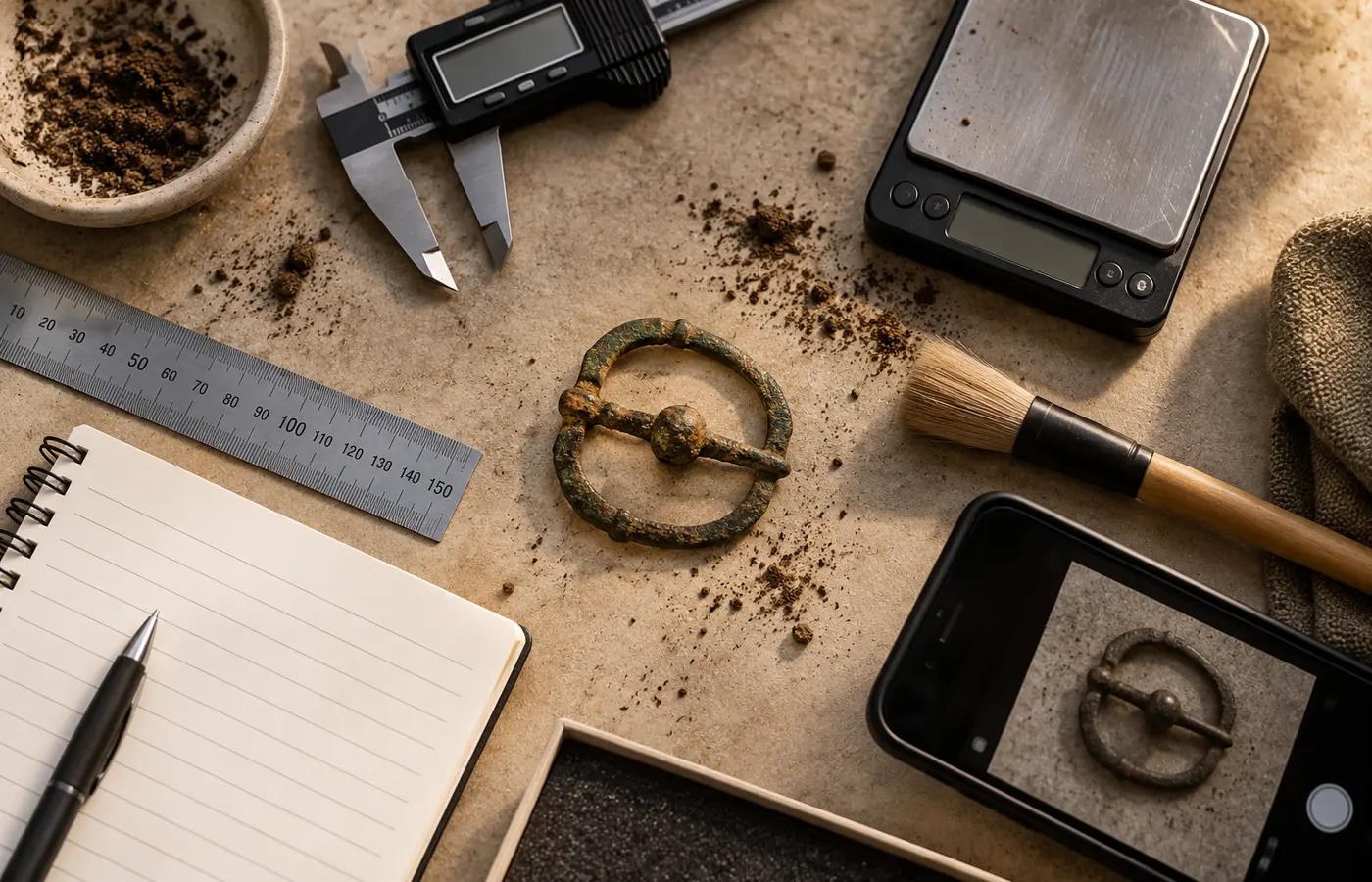
Use this eight-point checklist before cleaning, researching or posting an unknown metal detecting find.
1. Protect the find immediately
Handle fragile objects by the edges, keep loose pieces together and avoid bending, scraping or polishing. If the object is wet, do not force rapid drying. Photograph its original condition and note whether it came from salt water, wet soil or dry ground.
2. Record the discovery context
Write down the date, general region, soil type, approximate depth and detector response. Never publish exact coordinates for a protected or archaeologically sensitive site. Context can be as important as the object itself when identifying age and use.
3. Photograph every useful angle
- Front and back photographed straight-on
- Both edges to show thickness and construction
- Close-ups of letters, seams, fasteners and decoration
- One photograph beside a metric scale
4. Measure accurately
Record length, width, diameter and thickness in millimetres. Weigh the object in grams when possible. Measurements separate similar-looking coins, buttons, buckles and fittings.
5. Describe the material carefully
Note colour, density, magnetic response and visible corrosion without guessing too confidently. Green patina can suggest a copper alloy; orange scaling often suggests iron, but surface appearance alone is not proof. Do not use acid, bleach or abrasive tests.
6. Transcribe every mark
Copy visible letters, numbers and symbols exactly as seen. Record uncertain characters with a question mark. Rotate the photograph because worn lettering may become clearer under light from another direction.
7. Compare multiple features
A single similar image is not enough. Compare dimensions, metal, attachment method, edge, lettering and construction. Prefer museum catalogues, official heritage databases and specialist references over unsourced marketplace listings.
8. Ask for a reviewed identification
Post the photographs, measurements and general region together. Clearly separate what you observed from what you suspect. Treat community answers as leads until several features and a reliable reference agree.
Printable field summary
- Do not clean first
- Record general context
- Photograph front, back, edge and details
- Add scale and weight
- Record detector ID as supporting evidence only
- Protect sensitive locations
- Compare several features
- Verify before declaring an identification
Frequently asked questions
Is detector Target ID enough to identify a find?
No. Target ID changes with depth, orientation, soil and nearby metal. Use it only as supporting context.
Should I clean a coin before photographing it?
No. Photograph it first and identify the likely material before choosing any conservation step.
Continue learning
Use our beginner metal detecting guide, compare equipment in the detector database, and ask for help in the DigTreasures community.
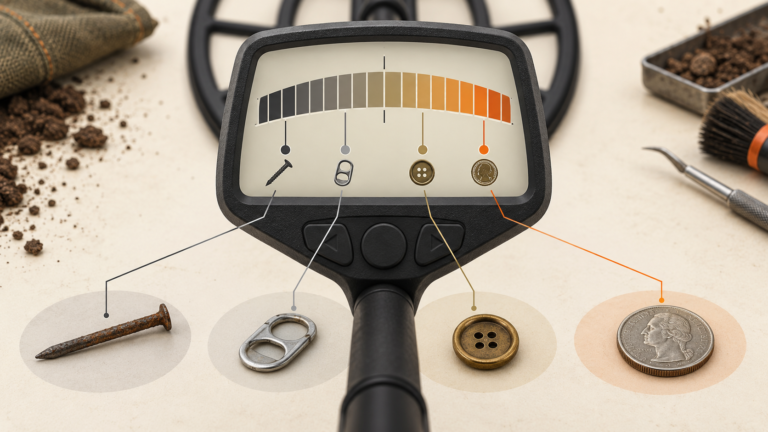 Detector Guides
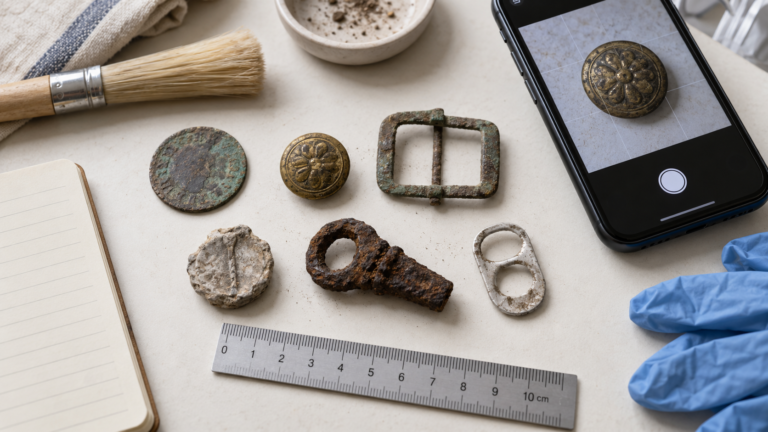 Identification Guides
 Beginner Guides