Choosing Your First Metal Detector: What Actually Matters
Focus on hunting environment, weight, waterproofing and target types instead of marketing hype.
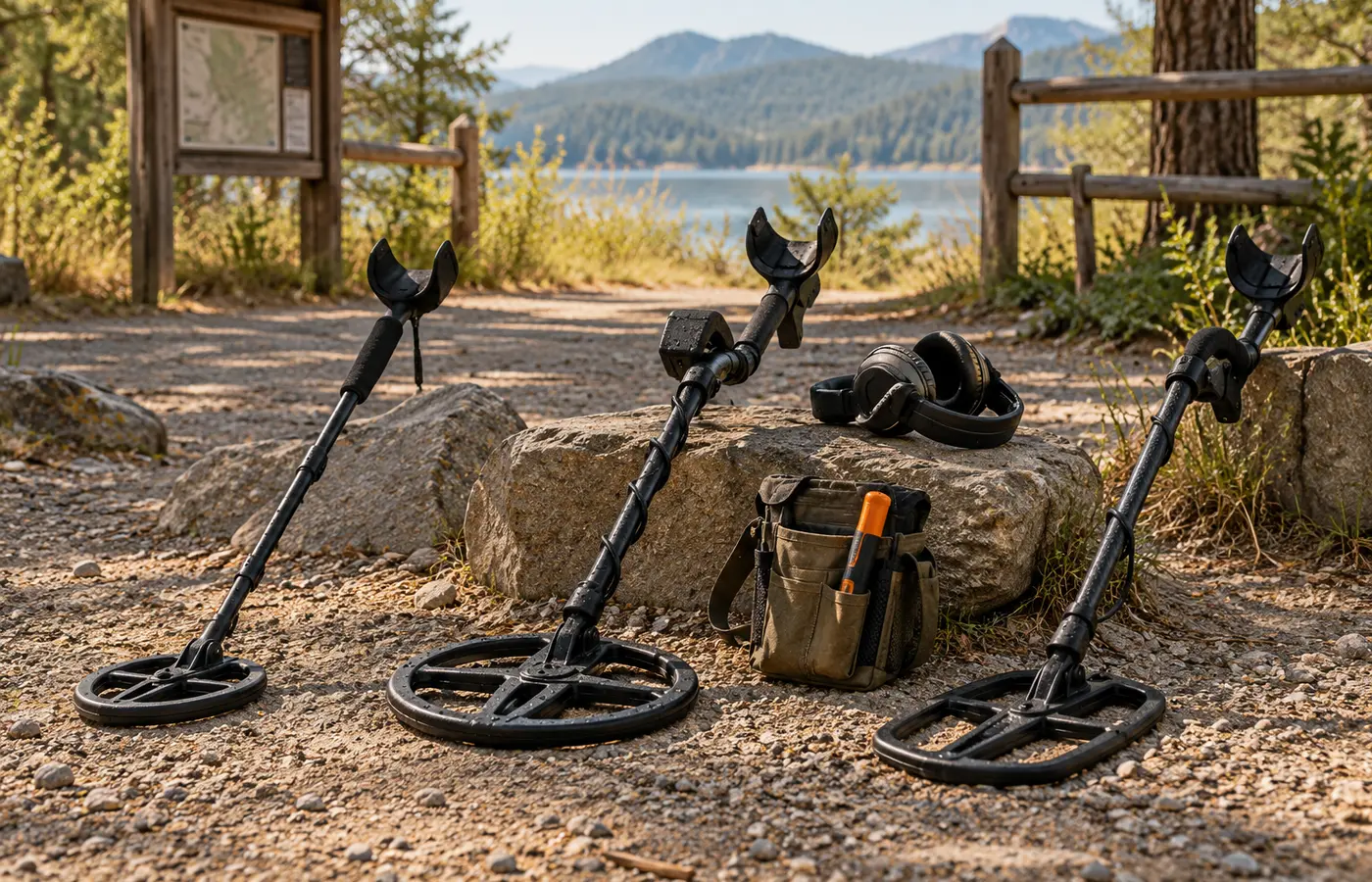
The best first detector is the one that matches where you hunt, remains comfortable for a full session and has controls you will actually learn.
Start with your hunting environment
Dry parks and fields, salt beaches, mineralized goldfields and underwater sites demand different features. A waterproof coil is not the same as a submersible control box. Saltwater beaches often benefit from stable multi-frequency operation.
Choose the right technology
Single-frequency VLF detectors are affordable and capable. Selectable-frequency models let you change operating frequency. Simultaneous multi-frequency detectors can provide stable, broad coverage. Pulse-induction detectors are specialist tools for difficult ground and deep gold, but often provide less target discrimination.
Weight and ergonomics matter
Published weight does not describe balance. A detector that feels nose-heavy can become tiring. Check collapsed length, adjustment range, grip angle and battery location.
Controls beginners genuinely need
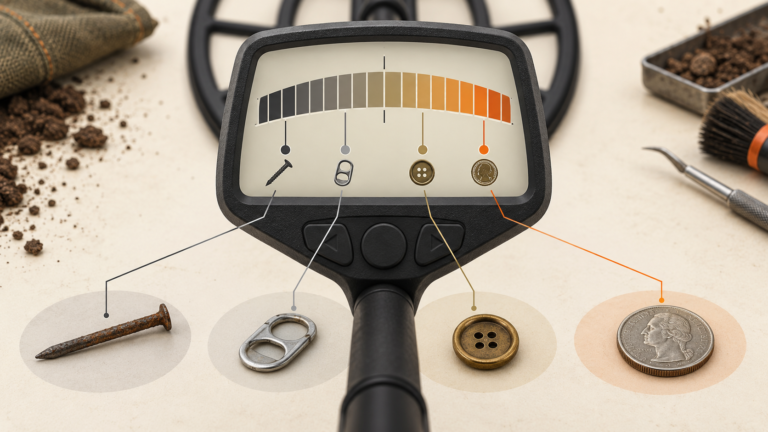
- Clear target audio and readable Target ID
- Ground balance appropriate to local soil
- Sensitivity and discrimination controls
- Pinpoint mode
- Useful search profiles without confusing menus
Budget for the full kit
Include headphones, a pinpointer, recovery tool, finds pouch, coil cover and suitable footwear. Check what the exact package contains; model names are sometimes sold in several bundles.
Common buying mistakes
- Buying for advertised depth alone
- Ignoring local laws and land access
- Choosing a heavy specialist detector for casual parks
- Confusing water resistance with waterproofing
- Buying from an unverifiable seller
A sensible short list
Compare two or three models in our detector database. Give more weight to environment, ergonomics, warranty and authorized support than to a single headline specification.
Frequently asked questions
How much should a beginner spend?
Spend enough for stable performance in your main environment, then reserve part of the budget for recovery tools and a pinpointer.
Do I need simultaneous multi-frequency?
Not always. It is especially useful for varied ground and salt beaches, while a good single-frequency machine remains effective in many parks and fields.
Continue learning
Use our beginner metal detecting guide, compare equipment in the detector database, and ask for help in the DigTreasures community.
 Detector Guides