The Ultimate Guide to Identifying Dug Coins
Learn field-safe handling, photography, measurements and reference methods for freshly dug coins.
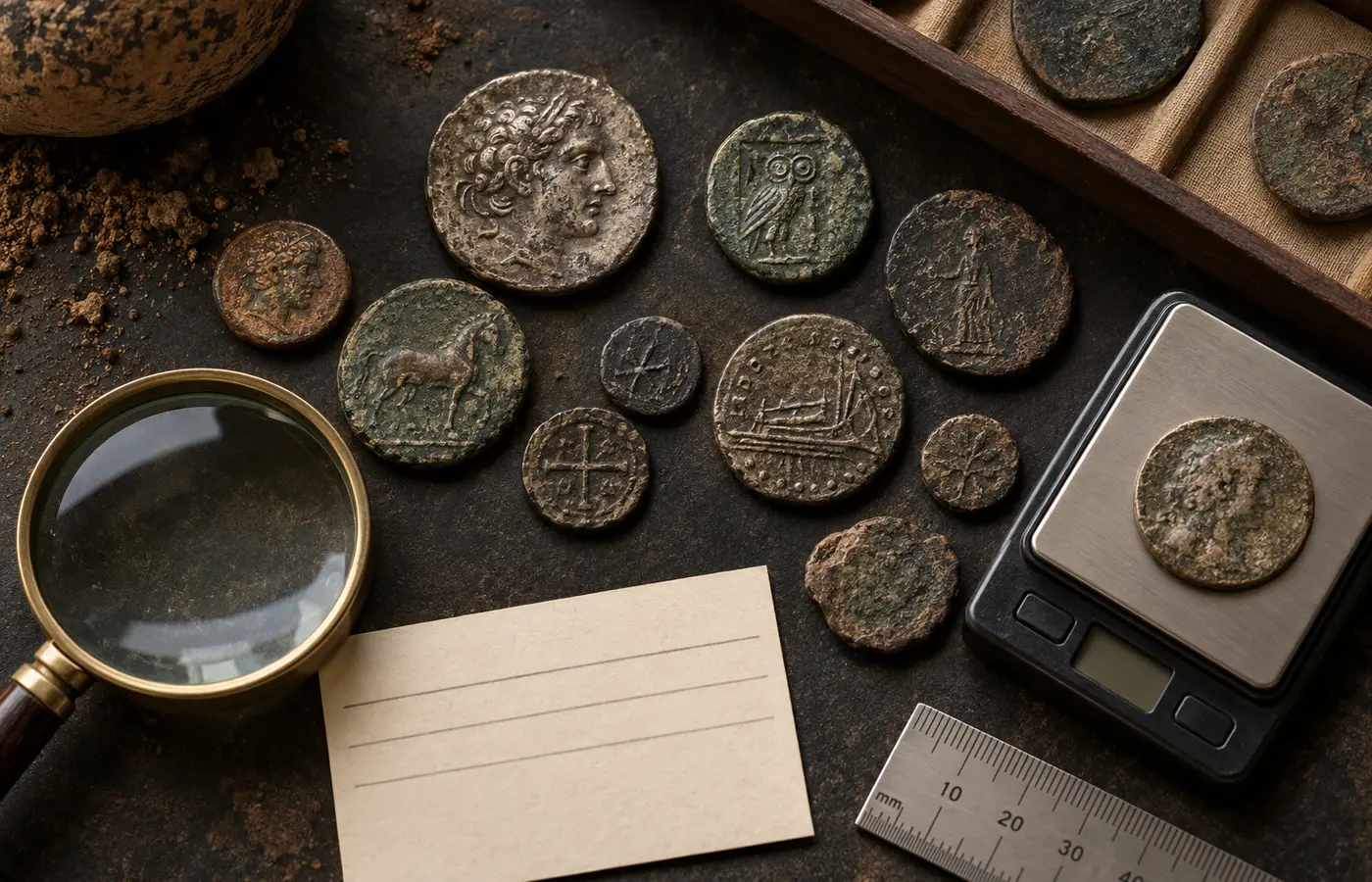
Freshly dug coins should be identified through measurements, design, lettering and trusted references—not by polishing until they look familiar.
Document the coin before cleaning
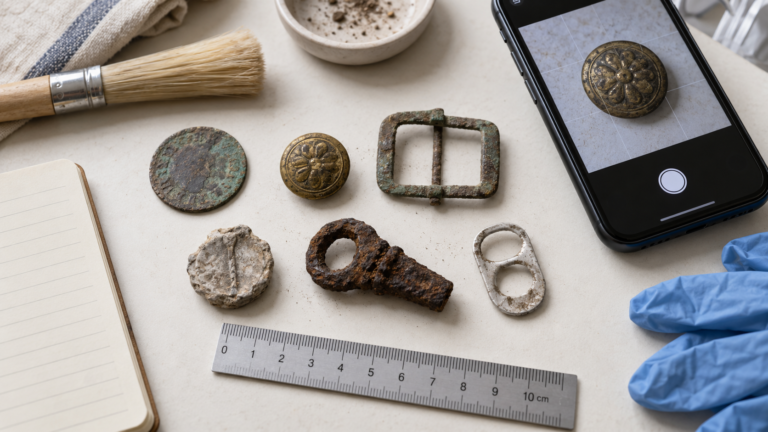
Photograph both faces, the edge and the coin beside a millimetre scale. Record its weight, diameter, thickness, general find region and detector response. Avoid rubbing the surface.
Read the coin systematically
- Portrait, animal, building, shield or central symbol
- Lettering direction and language
- Date format and mint marks
- Edge type: plain, milled, lettered or irregular
- Hole, loop or mounting marks that suggest later reuse
Measure before comparing
Two denominations may share the same design but differ in diameter or weight. Corrosion and clipping can reduce weight, so compare several features rather than expecting a perfect match.
Identify the likely metal
Observe colour, patina and density without destructive testing. A magnet can help identify iron contamination, but magnetic response alone does not identify the coin. Do not scrape an edge to expose fresh metal.
Use reliable references
Start with official mint catalogues, museum collections, national heritage databases and established numismatic references. Auction archives can help with photographs, but confirm descriptions through an independent source.
Watch for common traps
- Tokens and jetons mistaken for coins
- Modern reproductions with artificial patina
- Dates misread because of corrosion
- Mirror images or rotated reverses
- Similar rulers and portraits used across several countries
Cleaning and conservation
Do not use acids, metal polish or abrasive brushes on an unidentified coin. Stable patina and toning can protect detail. If the coin may be rare, fragile or reportable, seek specialist advice before further treatment.
When to report a coin
Reporting requirements vary by country, age, material, number of coins and discovery context. Check current official rules and notify the appropriate heritage authority when required.
Frequently asked questions
Can an app identify a dug coin?
An app can suggest candidates, but corrosion and poor lighting cause errors. Verify with dimensions and trusted references.
Does a green coin mean it is ancient?
No. Copper alloys from many periods develop green corrosion. Patina colour is only one clue.
Continue learning
Use our beginner metal detecting guide, compare equipment in the detector database, and ask for help in the DigTreasures community.
 Identification Guides
 Identification Guides