How to Identify a Metal Detecting Find: A Beginner’s Guide
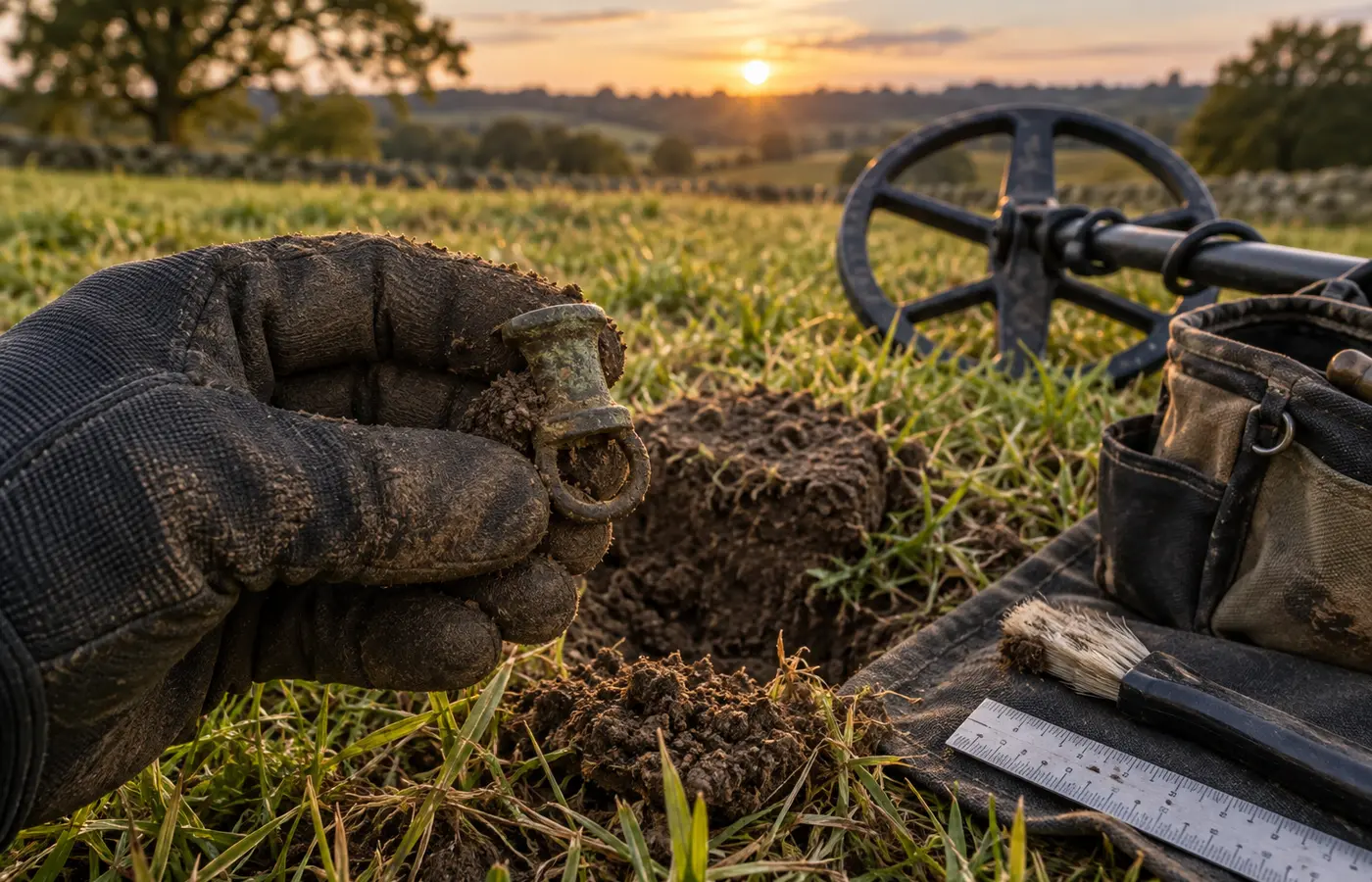
How to Identify a Metal Detecting Find
Found an unknown coin, relic or metal object? Follow this practical step-by-step guide before cleaning or damaging your discovery.
POST YOUR FIND FOR IDENTIFICATION →Finding an unknown object is one of the most exciting moments in metal detecting. A signal becomes a target, the target comes out of the ground, and then comes the big question: What exactly did I find?
It may be an old coin, button, buckle, token, jewelry, military relic or another object that has spent decades underground. Corrosion and soil can dramatically change its appearance, so identification should begin before aggressive cleaning.
Photograph an unknown find before cleaning it. Aggressive cleaning can permanently remove dates, lettering, mint marks, plating and original patina.
DON’T CLEAN IT YET
One of the most common beginner mistakes is immediately cleaning a find. Dirt can hide important features, but harsh cleaning can destroy them permanently.
Avoid wire brushes, abrasives, polishing compounds and strong chemicals. Gently remove only loose soil until you know what the object may be.
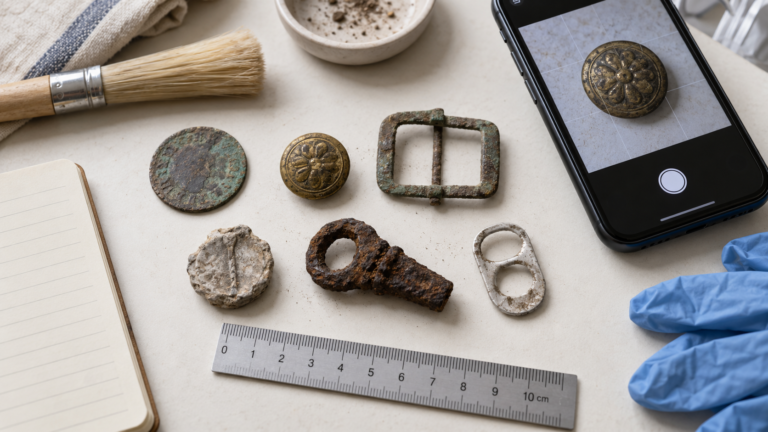
TAKE THE RIGHT PHOTOS
Good photographs can make the difference between a quick identification and a complete mystery.
MEASURE YOUR FIND
Two objects may look almost identical in a photograph while having very different dimensions.
CHECK LETTERS, DATES & SYMBOLS
Carefully inspect the object for surviving clues such as:
- Dates
- Letters and initials
- Numbers
- Portraits
- Crowns and shields
- Animals or stars
- Mint marks
- Manufacturer marks
- Military insignia
Even one readable character may significantly narrow the identification. However, corrosion can distort letters and numbers, so uncertain markings should be treated as clues rather than proof.
IDENTIFY THE POSSIBLE METAL
The material can provide another important identification clue.
Detector target IDs can be helpful, but they should not be considered definitive proof of the object’s composition.
WHERE WAS IT FOUND?
Location provides context. The same-looking object may have completely different origins depending on the country or region where it was recovered.
Share the country or general region when asking for identification. Avoid publishing exact coordinates of archaeological or protected locations.
COMPARE — DON’T GUESS
Compare multiple features rather than relying on a single online image.
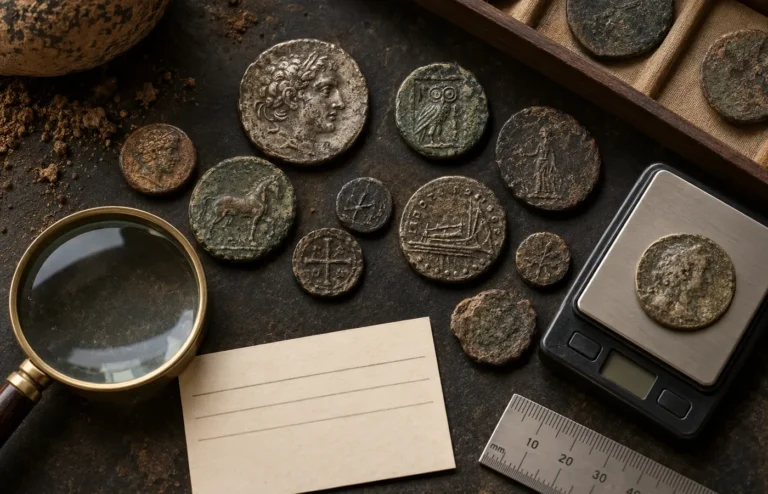
For coins, compare weight, diameter, lettering, portrait and reverse design. For buckles, buttons and relics, compare construction methods, attachment systems, metal type and decoration.
ASK THE COMMUNITY
Some objects remain difficult to identify even after careful research. Experienced detectorists and collectors may notice details you missed.
When requesting help, include:
- Clear photographs
- Diameter and dimensions
- Approximate weight
- Possible metal
- Country or general region
- Visible dates, letters and symbols
Let the DigTreasures Community Take a Look
Upload clear photos and information about your discovery. Other detectorists can examine the object and help point you toward a possible identification.
POST YOUR FIND →Quick Identification Checklist
Every Find Has a Story
Good identification starts with good documentation. Take your time, preserve the find and let the evidence guide you.
Other detectorists can examine the object and help point you toward a possible identification. Additionally, utilizing a quick identification checklist can enhance your accuracy in determining the nature of your find. It is crucial to document every aspect of the object, including photographs, measurements, and any distinguishing marks or symbols. Engaging with the community can further enrich your understanding and appreciation of the historical significance of your discovery.
 Identification Guides
 Identification Guides